Parental Leave Reform
Research Director Professor Anna Tarrant and study researcher Dr Linzi Ladlow co-founded the Social Policy Association Family Policy Group in 2022, providing a space to share findings about young fathers' experiences of parental leave in the UK and inform wider policy debates on the broad areas social policy relates to, including housing, welfare and support for children and families. The group established a collaborative of researchers across the UK which engages in diverse activities for the purposes of promoting social policy research, critiquing and influencing national policy debates and identifying areas for future research.
Sharing Our Parental Leave Research in Parliament
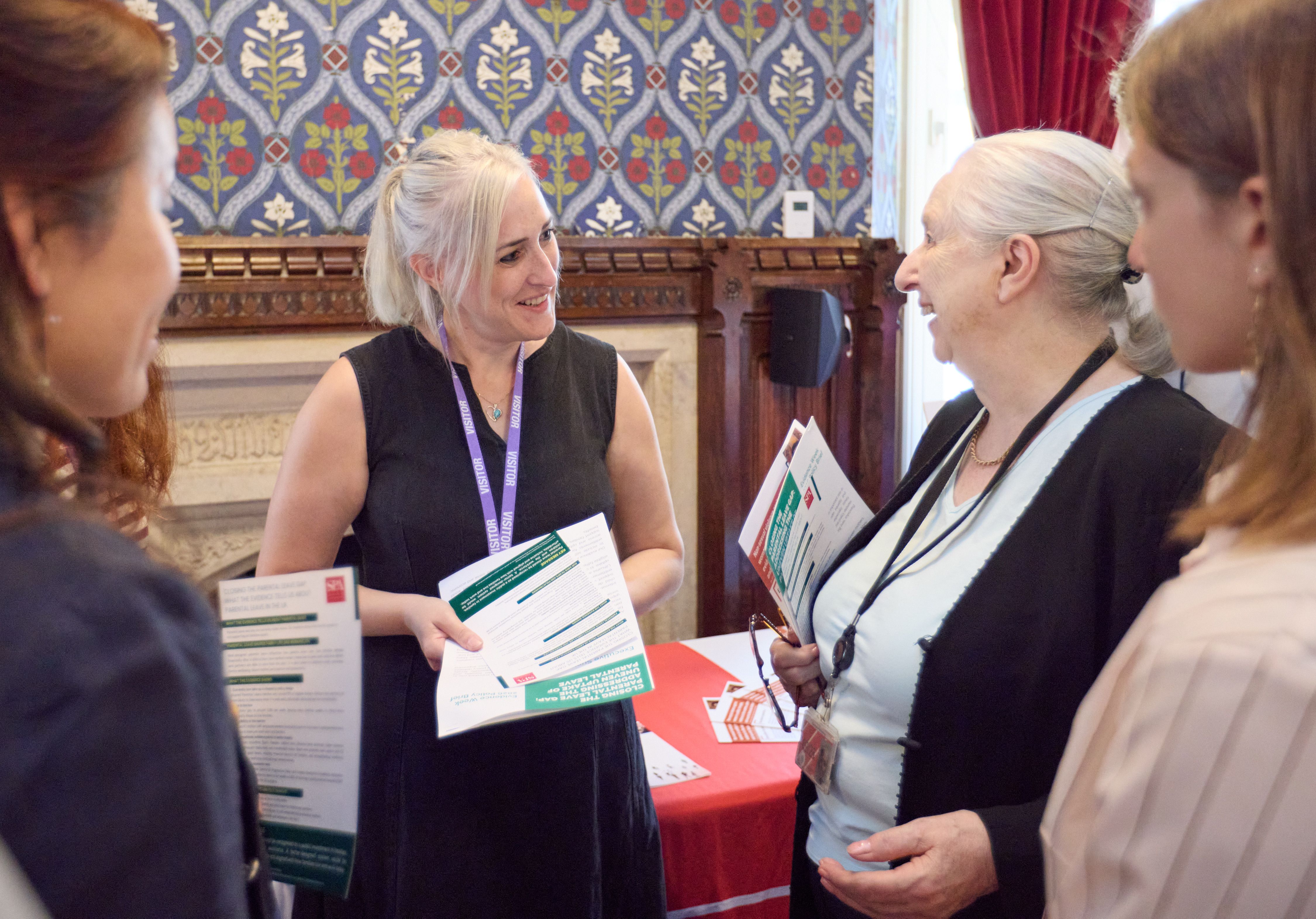
In July 2026, colleagues from the Social Policy Association's Family Policy Group took part in Evidence Week in Parliament, presenting research on parental leave to MPs, peers and parliamentary staff. With funding and support from the Social Policy Association, the group worked alongside Sense About Science to develop a policy briefing, produce a short video, and prepare for conversations with policymakers about how research evidence can inform reform.
The team, led by Anna and Linzi, with Professor Alison Koslowski (UCL), Dr Sung-Hee Lee (University of Derby), Dr Patricia Hamilton (University of York) and Naomi Finch (University of York), drew on their own studies of parental leave with families, alongside wider international evidence, to show how low statutory pay and narrow eligibility rules continue to restrict access to parental leave and limit opportunities for shared care. For our team, this was an important opportunity to make the case for extending leave for fathers and to outline the wider family benefits of this.
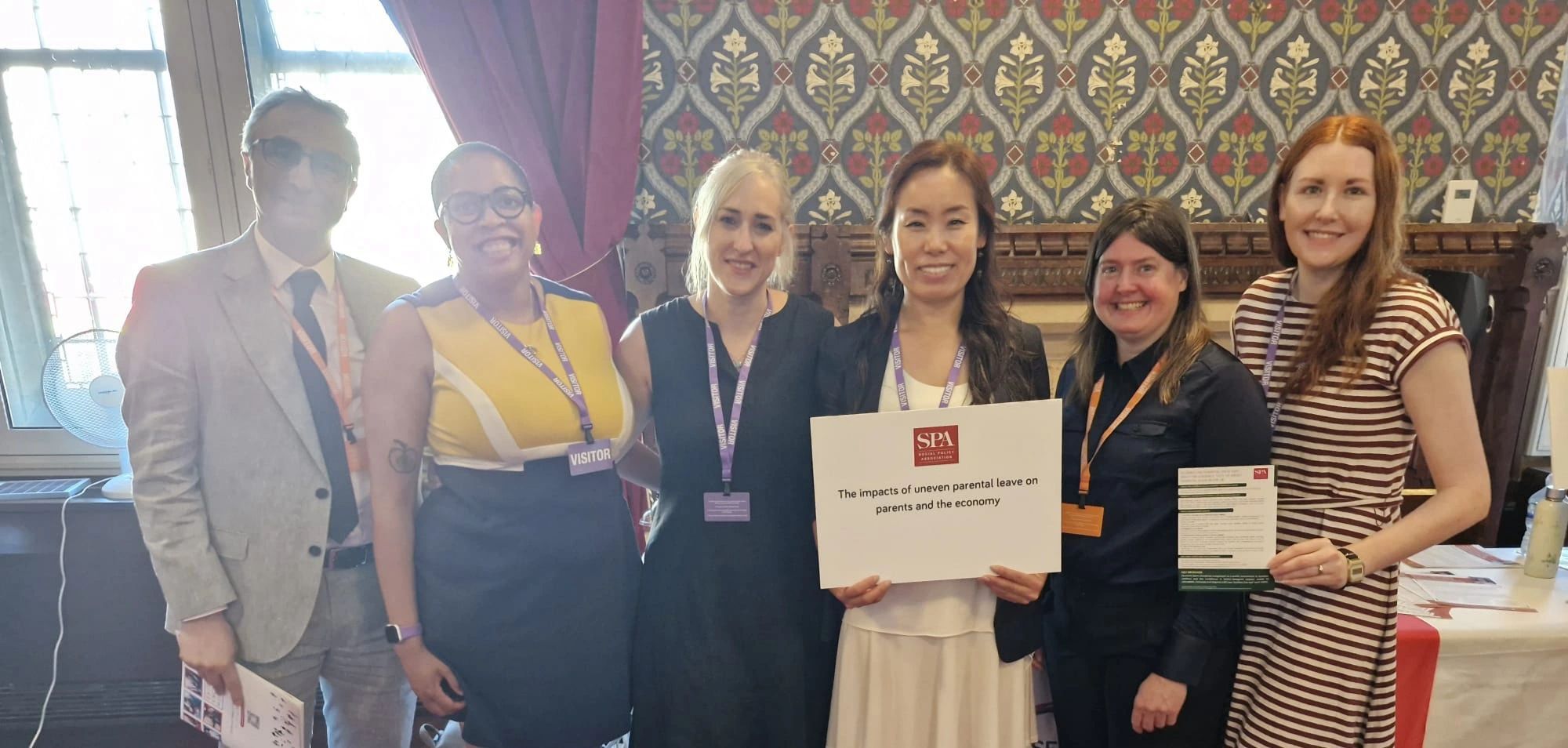
Our core message was that parental leave should be treated as an investment in families, children and the workforce. The group's recommendations included raising statutory pay, introducing dedicated and well-paid leave reserved for fathers and partners, extending eligibility to self-employed and precariously employed parents, and simplifying the system overall. This builds on the group's published analysis of Labour's early reform proposals in Social Policy and Society.
What Evidence Week involves
Evidence Week brings researchers and parliamentarians together to discuss the evidence underpinning policy decisions. As part of this, the Family Policy Group took part in a briefing session where MPs, peers and their staff could move between teams, hear findings directly, and take away briefing materials.
Ahead of the event, the team received training from Sense about Science on how policymakers use evidence and how to pitch research effectively, and prepared a three-minute briefing alongside their written materials and an accompanying video (see below).
Conversations in Parliament
On the day, the team spoke with MPs, peers, parliamentary aides and a journalist, including MPs actively involved in the government's ongoing review of parental leave policy. Discussions moved well beyond the prepared pitch, shaped by visitors' own questions and drawing out how the recommendations might work in practice from a range of political perspectives.
The experience offered valuable insight into how Parliament engages with research evidence, and reinforced the value of working collectively as a group, bringing together different studies and expertise to respond to the questions that mattered most to policymakers.
Our outputs
Download 1-page policy briefingpdfDownload Parental Leave Policy BriefingpdfImpact from the day
- University of Lincoln press release,
- Journal of Social Policy and Society blog about our latest article,
- The Conversation article,
- Professor Anna Tarrant features on BBC Lincolnshire and BBC Sounds
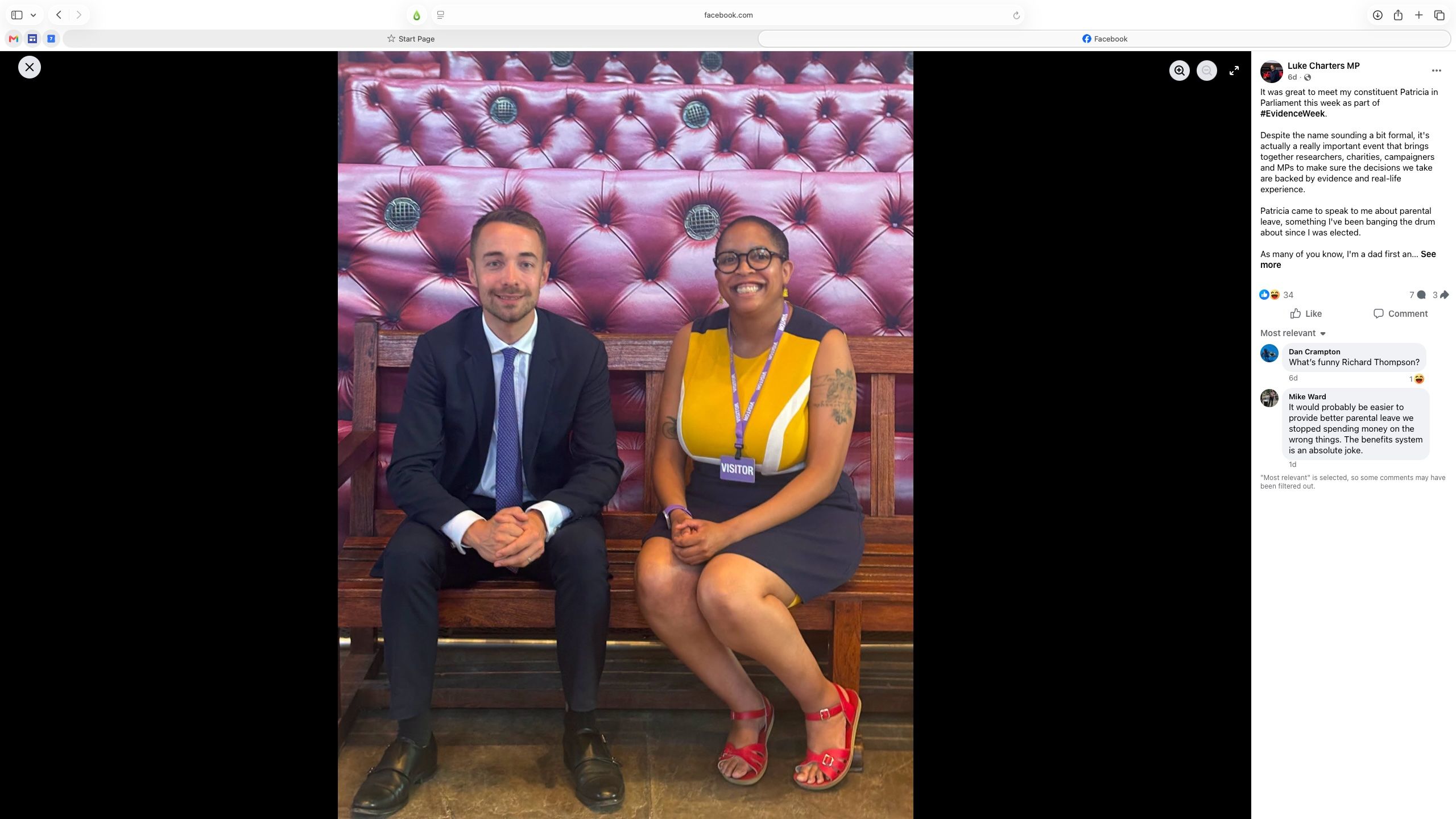
- Dr Patricia Hamilton meets Luke Charters MP
Join the Social Policy Group
The SPA Family Policy Group brings together researchers and practitioners to think critically about the policies shaping family life; from parental leave to housing, employment and social security. The group is led by Anna Tarrant and Linzi Ladlow. We welcome anyone interested in joining, including researchers and those working with families in policy and practice. Please contact lladlow@lincoln.ac.uk or atarrant@lincoln.ac.uk for more information about the group.
From our partners and young dads
“[daughter]'s almost two-year-old. She came up the house and she actually really liked it. Preferably my house is the best place for her to, for the contact to be, if I’m honest, 'cause we just buy toys for her all the time. We’ve got a lovely garden that she can play in, lovely, big, and we’ve got a sandpit in there. We’ve been buying loads of things for her to play with to keep her occupied.”
“[Speaking about support of young fathers] We’ve done a lot of kind of advocation and representing them, a lot of the time there’s involvement with statutory services. They don’t have the care of the young person, the care’s provided by the state or the mother, so we’ve attended lots of meetings with the young person to offer additional support and facilitated contact where necessary and offered just general emotional wellbeing, support, improving robustness and resilience, encouraging them to have as amicable relationship as possible.”
“And I suppose it goes back to what we were saying before about behaviours, maybe the education side of stuff and the fact that men aren’t involved in those early conversations, you know, whether it is, I know they’re invited to come along to bumps to babies but I don’t know whether we go into the detail around some of that brain development side of stuff and things like that. Maybe that is the thing that really would change things. You know, if you were given all of that information about what happens to a child as they grow, in a scientific way, as easy to understand as possible, could be the thing that impacted on behaviour in the home.”
“If your child’s with the mother, like your relationship with her depends on your relationship with the child, innit. That’s what I realised a lot, like you can try and be bitter, you can try and be this, be that, but it’s just gonna push you further away from your child, innit.”
“I wanna fight for more stuff for dads. Like I do wanna have that extra support for new dads or even existing dads that we don’t get now 'cause we’re still important too although obviously the mum does need the majority a’ the care because obviously of the after care and the birth. But like the dads take it extremely hard as well. And obviously with having no support I think it increases the rise of mental health.”
“I think both a mother and father combined, it’s communicating and both being on the same page of what’s best for your child or children, and for both, it’s just being there 100% for them and not, like, putting yourself first, it’s, you know, putting the child’s interests first... ”
“We need to be including, we need to not [just] be focusing on mum and child […] That’s a great focus but dad … dad’s not invisible, dad needs to be in the picture as well because there’s research that shows you the effect it has on children and families as a whole when dad isn’t in the picture, so services need to be changing the way in which they work so it’s more inclusive.”
“Cause I think a lot of the time, some of young people who end up having children have been through the care system or support systems and they can feel quite judged or labelled by organisations and it’s breaking the cycle and breaking them out of that to feel empowered to be able to take stuff back, that’s the real interest to me. So, it’s about getting support right, as in being there and giving advice and guidance and all them things that we can do, but also making sure that we are doing with people as opposed to people.”
“One of the most successful projects we ever did was an informal dads’ group, and it used to be on Saturdays […] they did what they wanted, they used to do things like breakfast, and they would have breakfast together and talk about dad stuff and where they were taking their kids. And that group was always really well attended because there was never an agenda. They were never judged. They were just there together.”
“...the whole stay at home dad thing is not something to be ashamed of, you know, if you’re a dad and you wanna take your daughter out for the day, or you wanna take your kid out for the day on your own, well why is that frowned upon, why can’t you take your child out for the day”
“Oh…patience…compassion…tolerance, a whole boatload a’ that! Honestly, I like a whole lot of life. Sacrifice…compromise, yeah I think, yeah I think they, they would be the, the big, the five, I feel, I think that was five, they would be the main. ”
“We’re currently in touch with social services for two [dads] because they don’t understand why they can’t see their children because they haven’t been informed by social services, their partner. So there’s a massive communication breakdown with those young men, so that’s the main focus of what we’re dealing with at the minute.”
“it’s still…the…sense of judgement I get from other people when they find out that I have a child.And they say, ‘oh how old is she’.I say, ‘oh she’s ten’. And they say, ‘oh how old are you?’. Like you don’t need to know that....I know exactly where that thought process is going, you know. It’s like, ‘oh you look really young and you’ve had a kid’. It’s like, ‘yeah I know, I was there!’”
Partners